
The Door as a Boundary
The Whisper ManThis flow traces how doors change from ordinary household objects into symbols of consent, intrusion, fear, and agency.
increasing Bearing strength in each event
 decreasing
Bearing strength in each eventdecreasingThe Half-Open Door
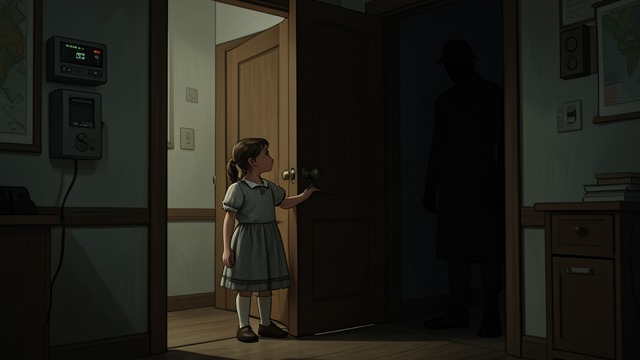
The Half-Open Door
A Child’s Rhyme
The little girl teaches Jake Kennedy that a half-open door invites whispers. The rhyme turns an ordinary gap into a warning about unseen danger.
Tom’s Dismissal
Tom assumes the words are playground nonsense. His adult rationality prevents him from recognizing that the rhyme encodes the local history of The Whisper Man.
A Boundary Unnoticed
The warning matters because Jake cannot control the doors around him. Adults decide what is safe, while children live with the consequences of those decisions.
The Locked Door
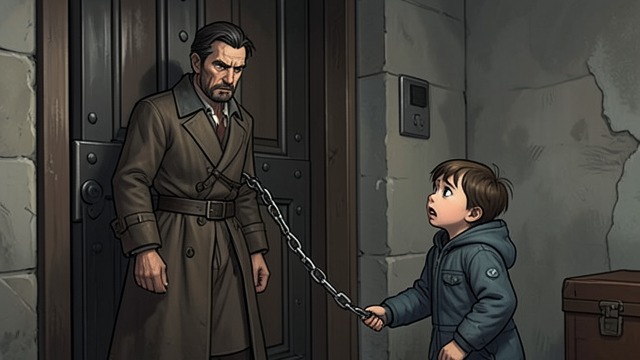
The Locked Door
Reassurance
Tom tells Jake that the front door is locked, although it is not. His lie is meant to calm the child but exposes the weakness behind the household’s protection.
The Whispered Threat
Jake repeats the rhyme and insists that doors must remain secured. His fear is not merely imaginative; someone is already learning how to approach him.
A New Responsibility
Tom hooks the chain and begins thinking about bolts and alarms. Security becomes a practical expression of the father’s promise to protect his son.
The Open Door
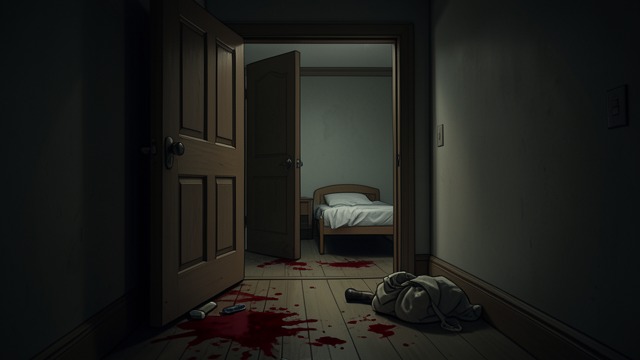
The Open Door
A Fatal Gap
Tom returns to find the front door open and bloody footprints inside. The image fulfills the rhyme’s warning and reveals that the boundary between home and danger has failed.
The Missing Child
Jake is absent from his bedroom while the Packet of Special Things remains. The open doorway becomes the visible sign of a crime that began through persuasion rather than force.
The Search Begins
Amanda Beck’s investigation treats the house as a breach of security and trust. The domestic threshold has become the starting point for a national-scale emergency.
At 567 Club
First night at 13 Garholt Street
Night of Jake’s abduction
